
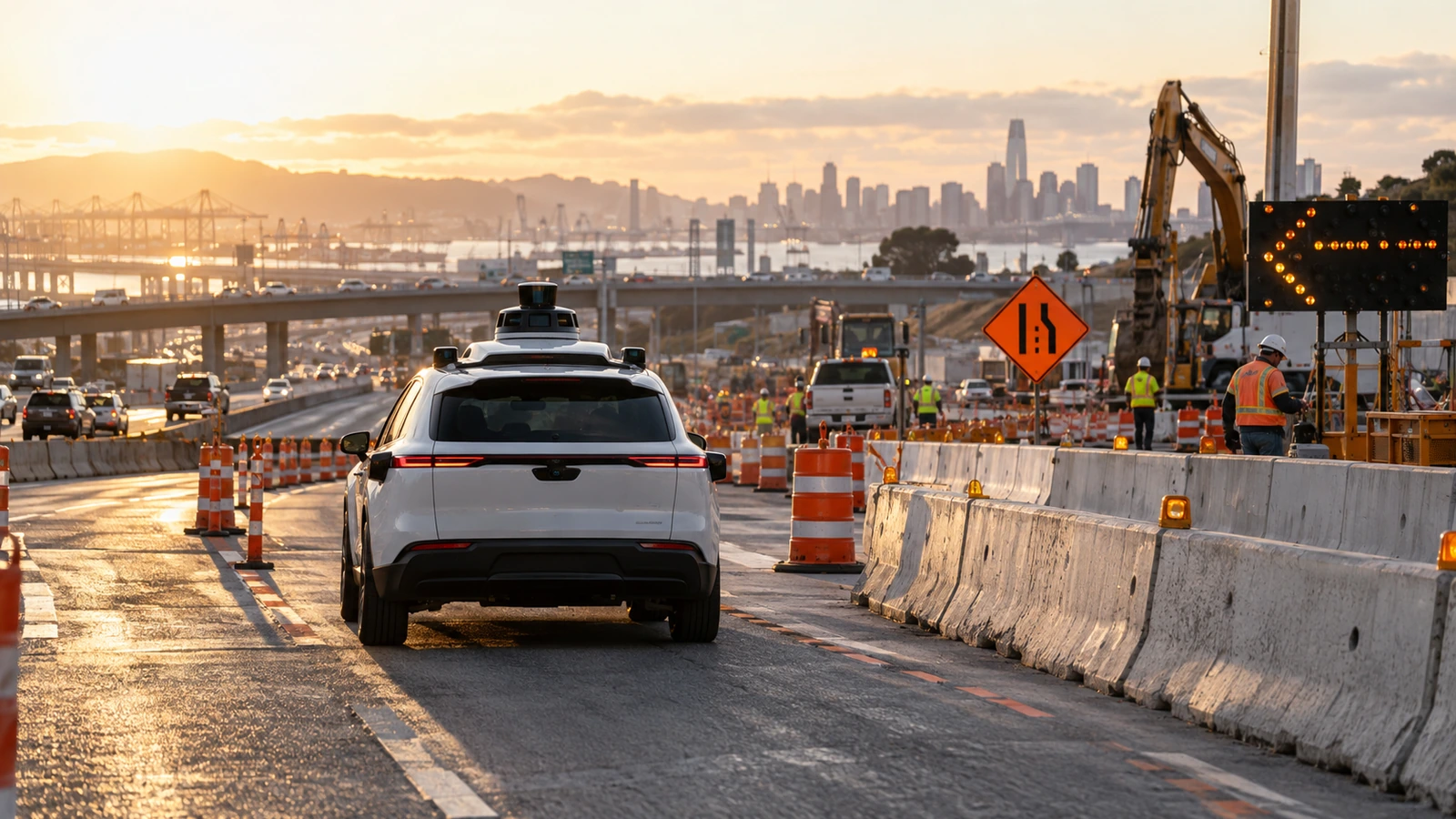
California’s reported ban on driverless Waymo rides on state freeways draws a useful line between a robotaxi service that works on many city trips and one that is ready for every part of a journey.
According to Associated Press reporting, the California Department of Motor Vehicles issued the restriction on November 11 after incidents involving driverless Waymos and active construction zones. Waymo then temporarily restricted commercial freeway rides in every market where it offered them, while continuing freeway testing with trained autonomous specialists.
A broad service area is not the same as a complete trip
Freeways are often presented as an easier driving problem because lanes are controlled and cross traffic is limited. The reported incidents underline the exception: construction, emergency activity and temporary traffic controls can turn a predictable road into a fast-moving interpretation problem. A vehicle must detect the scene, understand which instructions apply and react conservatively around workers.
For riders, the immediate consequence is less dramatic but more practical. A trip that would normally use a freeway may become slower, unavailable or routed differently. For cities and employers considering robotaxis, the question is not whether an app can summon a car. It is whether the service can reliably cover the trips people actually need.
Safety claims need the operating boundary
Waymo has previously operated under California autonomous-vehicle permits, and the DMV’s permit-holder record lists Waymo for driverless testing. A permit, a city launch and a freeway restriction answer different questions. None should be used as a shortcut for a general verdict on all autonomous driving.
This article does not establish a comparative crash rate for Waymo and human drivers. The reported action concerns a specific operating environment and a regulatory response. The evidence that matters next is a public explanation of the corrective work, the conditions for restoring service and documented behavior in comparable construction scenarios.
Who gains and who bears the delay
Riders may gain a clearer signal that the service has limits rather than an invisible change in route quality. Road workers and first responders gain from regulators treating temporary work zones as a serious safety boundary. Waymo loses some of the convenience that makes robotaxis competitive with human-driven ride-hailing, while it works to prove the system can handle that boundary.
The commercial incentive runs both ways. Wider operating freedom makes more rides possible. Restricting a service before the evidence supports expansion can protect people, but it also tests whether the business model works with a smaller service envelope.
What to watch next
Watch for a California DMV order or update describing the restriction’s legal scope, Waymo’s dated description of any remedy, and whether commercial freeway rides resume under defined conditions. Until then, consumers should judge the service by the route and pickup actually offered—not by the size of a city on a rollout map.
Frequently Asked Questions
Did California ban all Waymo rides?
No. The reported restriction concerns driverless freeway operations in California, not every Waymo ride on city streets.
Did Waymo stop freeway rides outside California?
Waymo told AP it temporarily restricted commercial freeway rides in all markets where it offered that service.
Does this prove robotaxis are unsafe?
No. It documents a reported regulatory response to a particular operating problem. Broad safety comparisons require consistently defined exposure and outcome data.
Can Waymo still test on freeways?
Waymo said it would continue freeway testing with trained autonomous specialists in the vehicle.
What should a rider do if freeway travel matters?
Check the route presented in the app and keep an alternative available if a freeway segment, trip time or service reliability is important.